Protect
Jefferson
County
Before
It's
Too
Late
They're calling it a "solar farm." It's a 100 MW industrial power plant — up to 923 acres of arrays planned across the working fields of Watertown, Ixonia & Concord — and three commissioners in Madison decide, not us.
What's actually being proposed in our backyard
Every number below comes from the developer's own application to the Wisconsin Public Service Commission — Docket 9823-CE-100.1
A merchant-scale generating facility — not a family farm, not community solar.1
Land the developer holds rights to across three townships — down from a 2,104-acre study area, still three square miles of our county.1,2
558 "primary" acres plus 365 more the developer reserves as "alternative" array sites — plus ~110 acres of substation, roads and gen-tie.1,2
34.5 kV circuits trenched under the fields, feeding a new 138 kV substation.1
In development since 2018; the developer targets an in-service date of December 2028.1,2
Towns of Watertown, Ixonia & Concord. Farmington was in the original application and has since been dropped.1,2
Drag to see what they want to build
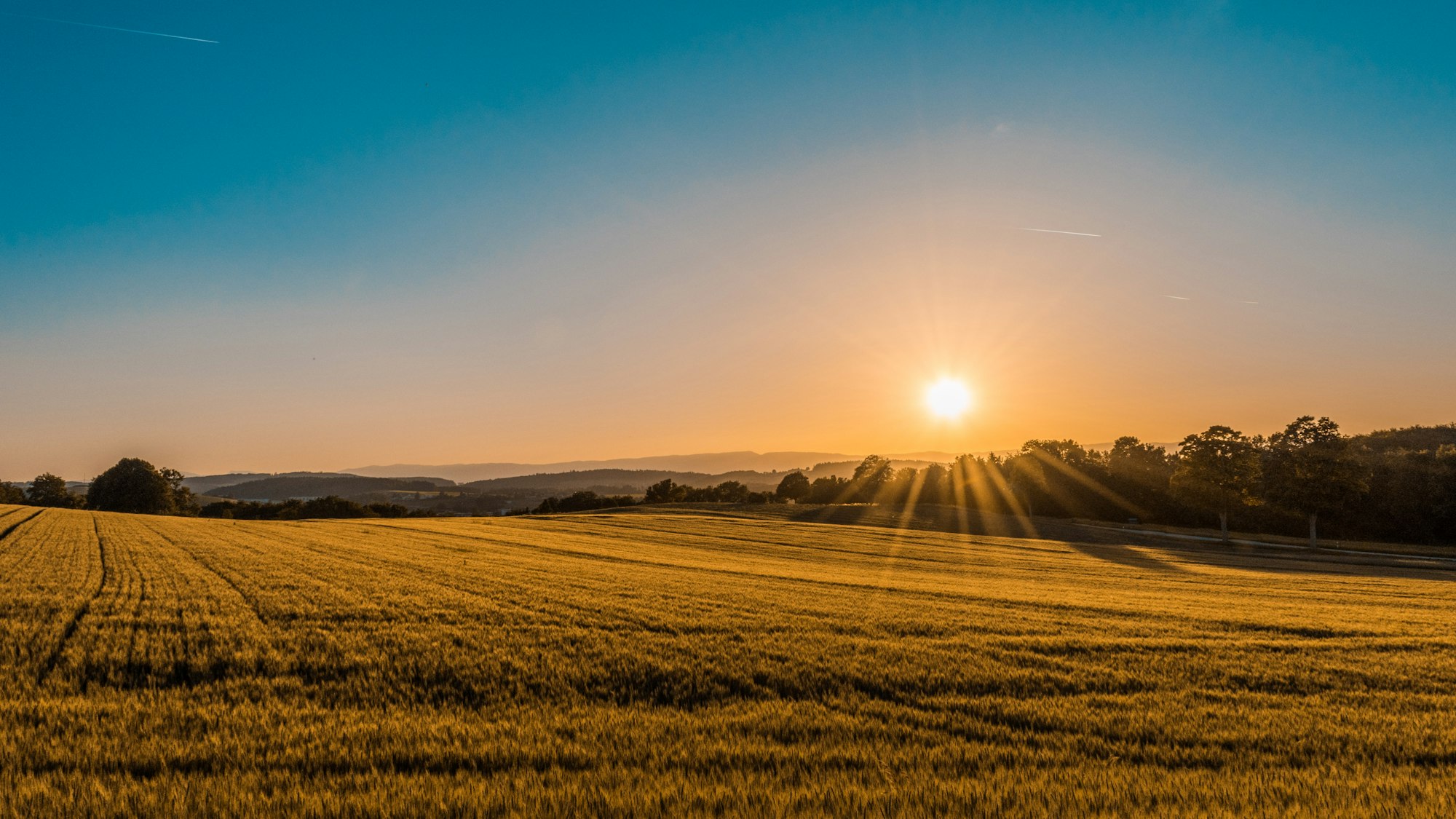
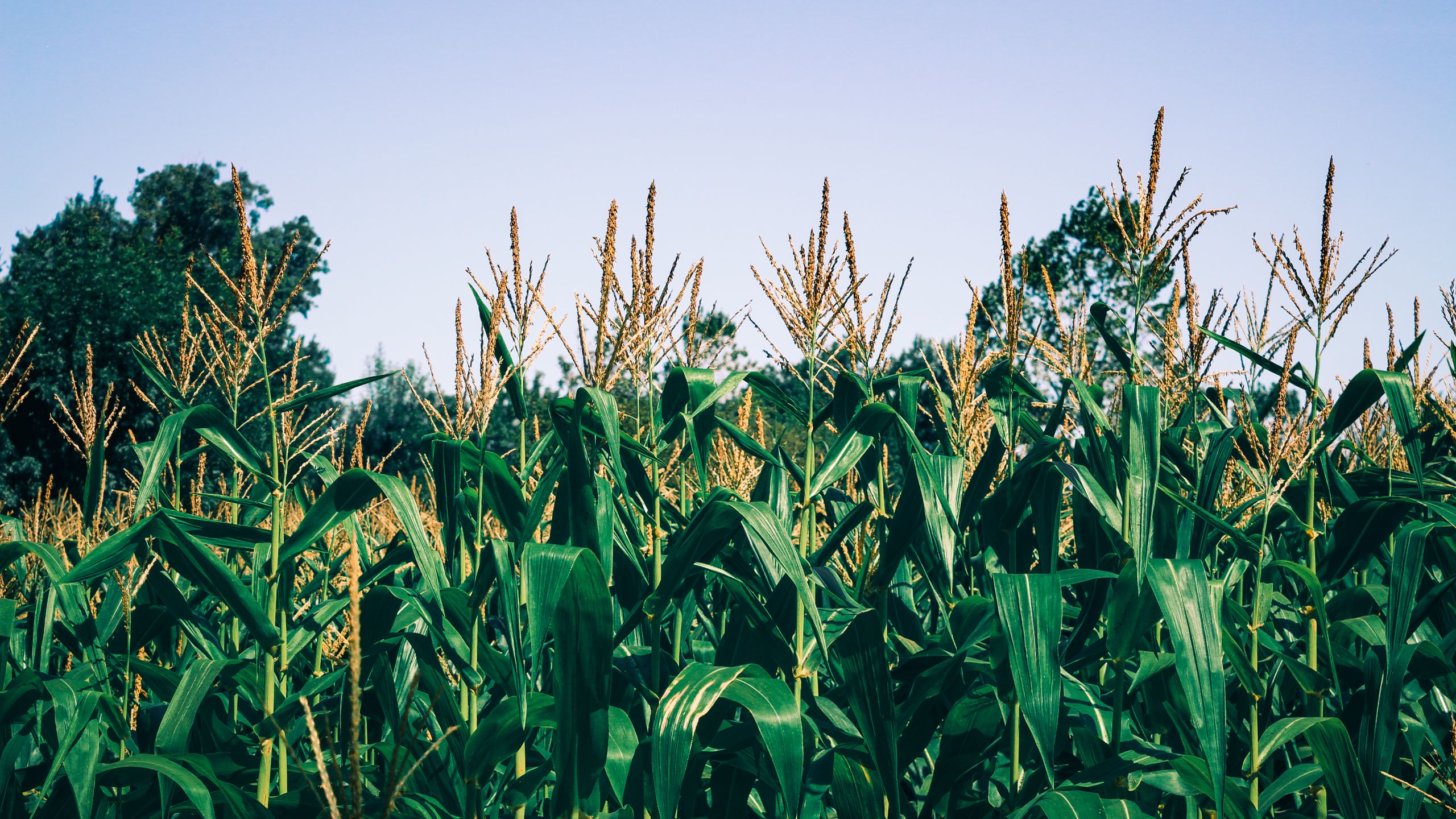
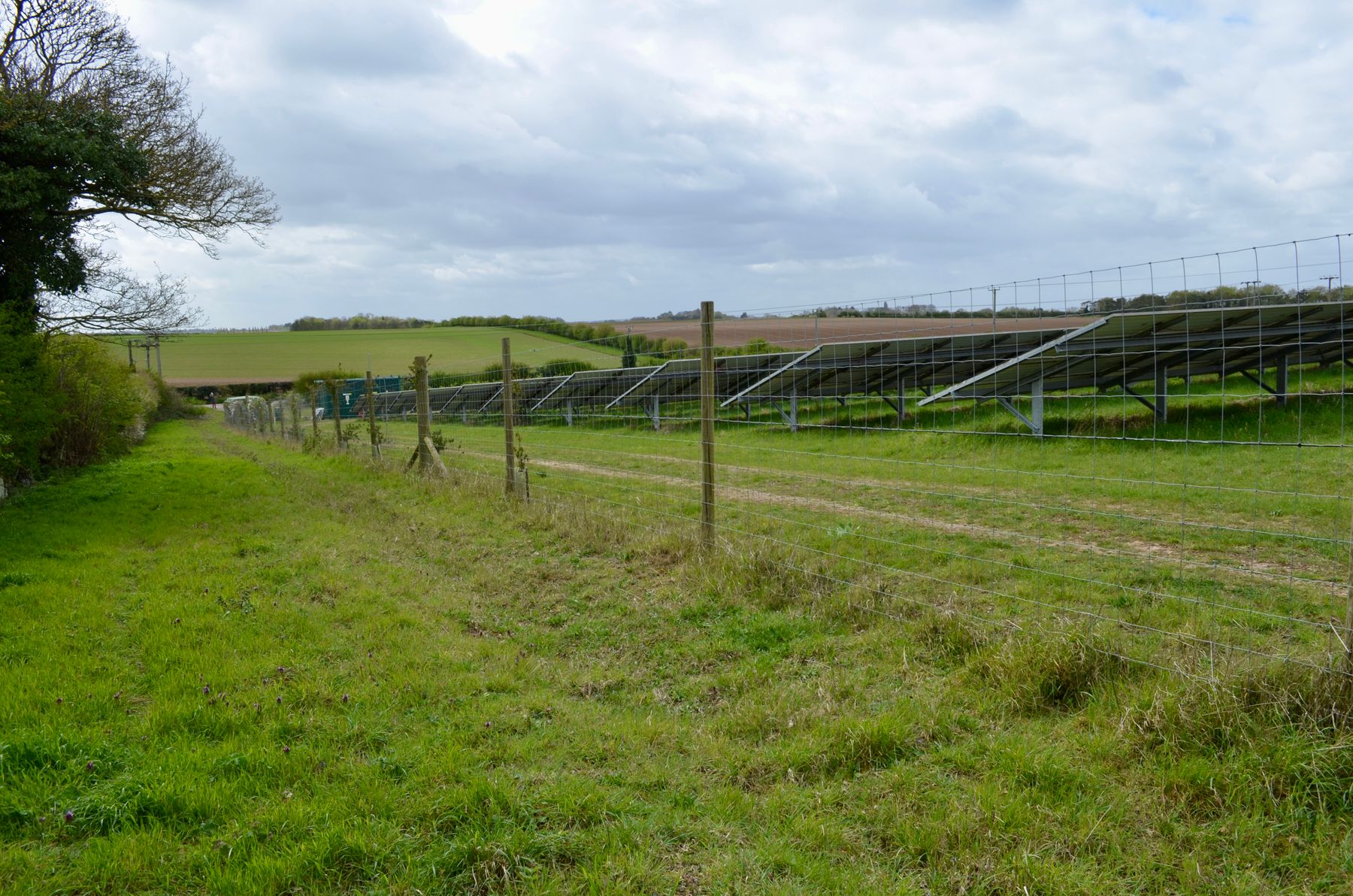
Same land. Same horizon. One of these grows food and holds our rural character — the other is up to 923 fenced acres of graded dirt, steel piles and glass. This is what construction actually looks like.
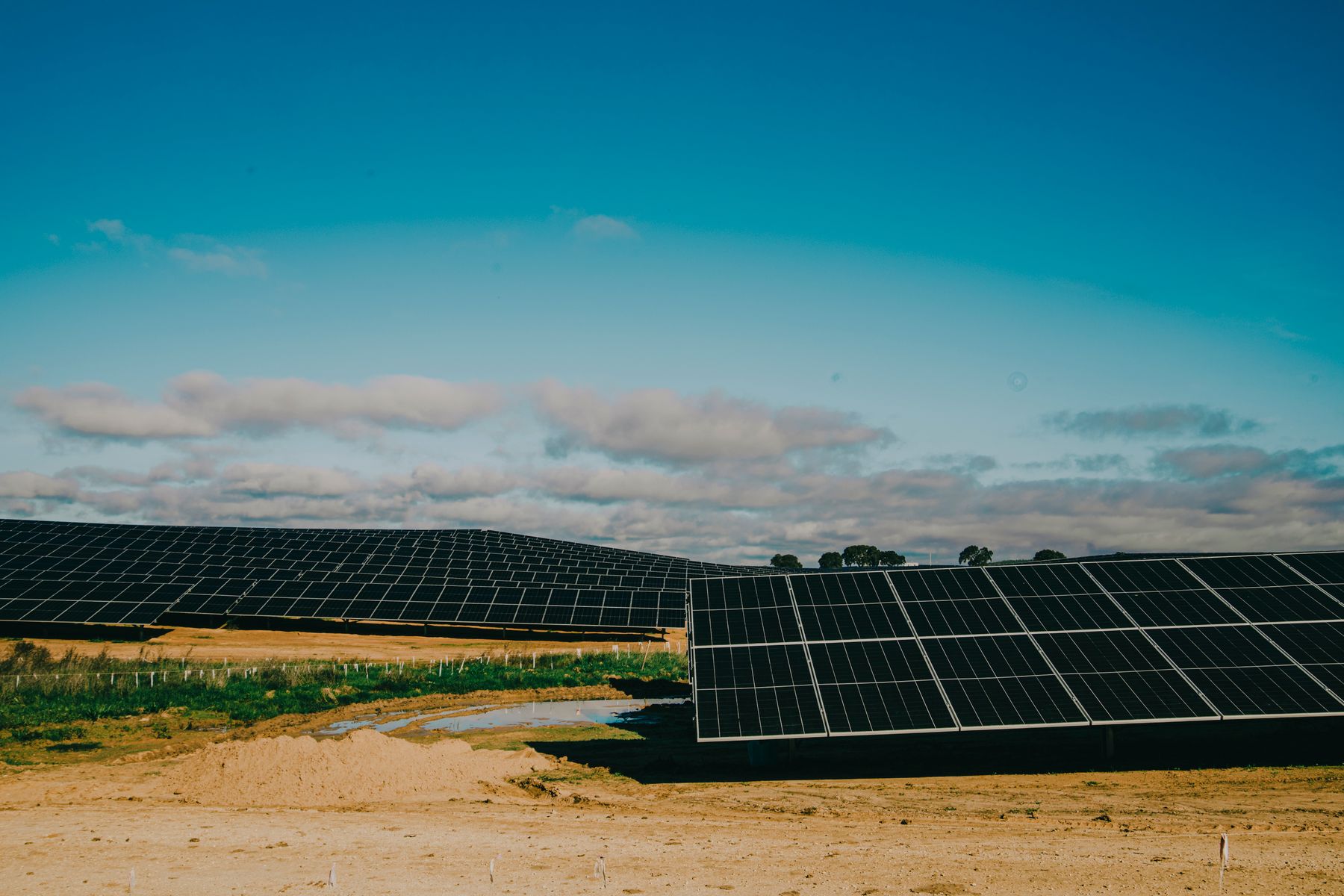
Once the fences go up, it isn't a farm anymore. Slide to compare.
It isn't a farm. It's an industrial power plant on farmland.
Eight documented, evidence-based reasons Jefferson County neighbors are demanding a real seat at the table.
They chose our best cropland — on purpose
The American Farmland Trust projects that of ~7 million acres of new U.S. solar by 2040, about 83% could land on agricultural land. Developers hunt flat, dry, cleared fields near power lines — the exact traits that make prime farmland.
American Farmland Trust, "Farms Under Threat 2040" (projection)4
Three commissioners decide — not us
Approval rests with three state commissioners in Madison. And under Wis. Stat. § 196.491, because it's a merchant plant selling into the wholesale market, the Commission is barred from even reviewing whether we need the power.
Wis. Stat. § 196.491; WI Legislative Council memos5
Neighboring homes lose value
A 2025 PNAS study of 8.8 million home sales and 3,699 solar sites found residential homes within three miles of large-scale solar lost 4.8% of value on average — a "stigma" cost borne by neighbors who never signed a lease.
Chen, Hu & Liu, PNAS 2025 · DOI 10.1073/pnas.24184141226
Fenced-off land fragments wildlife
A 2025 review in Renewable & Sustainable Energy Reviews found solar sites drive habitat loss and fragmentation, and perimeter fencing blocks the corridors animals travel. Residents have also flagged bald eagle nesting — a federally protected species — in the project area.
Fleming et al., 2025 · DOI 10.1016/j.rser.2025.115995 · PSC comment record7,3
No guarantee it ever farms again
Solar has a ~30-year life, and restoration means removing all below-ground structures, de-compacting soil and restoring drainage tile. Who does that in 2058 if the developer is bankrupt? Decommissioning bonds exist precisely because that risk is real.
Kleinman Center (UPenn); NC DEQ; DSIRE Insight8
You don't need THIS land
This isn't solar vs. no solar — it's siting. NREL found U.S. rooftops alone could supply ~39% of the nation's electricity, and the DOE and EPA push solar onto 450,000+ brownfields and landfills. The land to hit clean-energy goals exists. Prime Jefferson County cropland doesn't have to be it.
NREL rooftop assessment; DOE/EPA RE-Powering9
Whose hardware ends up on our grid?
The FCC just added foreign-made power inverters to its national-security Covered List (July 2026), citing risks of remote disabling of infrastructure — after Reuters found undocumented communication devices hidden in Chinese-made inverters. Sinnissippi's application names only example equipment, has signed no supply agreements, lists Chinese module makers as candidates — and nothing requires it to disclose country of origin before energizing 100 MW next to our homes.
FCC Covered List action, July 2026; Reuters, May 2025; Sinnissippi CPCN application10,11,12
"No significant impact"? Their own report disagrees
The state's preliminary determination says the project needs no full Environmental Impact Statement — yet the same assessment admits construction brings noise, dust and vibration for residents, soil erosion and runoff, and that "some animals may be displaced." Residents have documented numerous bald eagle nesting sites in the project area. An 1,944-acre project deserves the full study. Tell the PSC so — comments are due August 28.
PSC preliminary determination & Environmental Assessment, Aug 2026; docket comment record2,3
This project is decided in Madison — unless we show up
Public comment is our best remaining window. Here's where we are.
Invenergy starts signing landowner leases across the towns.2
Sinnissippi Solar Energy LLC asks the PSC for a Certificate of Public Convenience and Necessity — Docket 9823-CE-100. A revised application follows in March 2026.1
Hundreds of comments flood the docket. The Town of Farmington comes OUT of the project footprint, and the land under developer control shrinks from 2,104 to 1,944 acres. Pressure changes this project.2,3
The PSC's preliminary determination (Aug 4) would let the project skip a full Environmental Impact Statement. Comments on that determination are due Friday, August 28, 2026. This is the window.2
Vegetation removal, grading, pile-driving and 25 miles of trenching begin across the project area.1
Developer target in-service date. Once built, there is no guarantee the soil is restored to prime cropland.1,2,8
Signed a lease? Get independent legal advice.
We do not have a public copy of any landowner lease, and we will not guess what yours says. Only a Wisconsin attorney who has read your signed document can tell you what options, if any, apply to you.
- 1Locate the copy you signed
Keep the full document — not a brochure, not a verbal summary, not what a neighbor remembers. If you cannot find it, ask the company in writing for a complete copy and keep that request.
- 2Hire an attorney who represents you — not the developer
Have independent Wisconsin counsel review your specific agreement before you act, decline to act, or sign anything else. Do not rely on the company's explanation of your paperwork.
- 3Follow only the written advice on your file
If your attorney identifies a notice, deadline, or other step in your agreement, follow that instruction exactly and keep dated proof. We cannot name those terms from this page.
This is not legal advice. We are a neighborhood coalition. We do not interpret private contracts.
Want a confidential conversation?
If you signed and want to talk with neighbors — without us claiming what your paperwork says — reach out. We can help you find independent counsel. We will not tell you what is in your lease.
What is Sinnissippi Solar?
- A proposed 100 MW utility-scale solar power plant1
- Sited across the Towns of Watertown, Ixonia & Concord in Jefferson County — Farmington was in the original application and has been dropped1,2
- 1,944 acres under developer control; 558–923 acres of arrays, ~25 miles of buried collector lines, a new 138 kV substation and gen-tie1,2
- Proposed by Sinnissippi Solar Energy LLC, a subsidiary of Chicago-based Invenergy1
- Under review by Wisconsin regulators — PSC Docket 9823-CE-1001
- Because it's a wholesale merchant plant, state law bars the PSC from reviewing whether it's needed5
- No equipment supply agreements signed — final module & inverter selection comes later, with no country-of-origin disclosure required12
Why we're standing up
- Conversion of productive prime cropland to industrial energy use for decades
- Visual impact on homes, roads, and the character of our towns
- Years of construction traffic, noise and dust on rural roads
- Unanswered questions about wildlife — including reported eagle nesting3
- Unanswered questions about archaeological & cultural resources under 25 miles of trenching
- No guarantee the soil can be restored to farmable condition after decommissioning8
- Grid-security questions unanswered while federal regulators restrict foreign-made inverters10,11
- Once constructed, neighbors who never signed still live with the plant — a 2025 PNAS study found residential homes within 3 miles lost 4.8% of value on average6
- Local control stripped away — state commissioners decide, not our towns5
What we're fighting for
Protect rural character
Jefferson County's identity is farms, woodlots and open horizons — not chain-link fence and glass as far as you can see.
Wildlife & environment
Habitat fragmentation, blocked corridors and protected species deserve real, site-specific study — not boilerplate.
Cultural & historical resources
Trenching 25 miles of cable disturbs ground that may hold Native American and historical resources. Survey first.
Quality of life
Construction traffic, inverter and substation noise, dust and night lighting — imposed on families who never signed a lease.
Property rights & local control
Your biggest investment shouldn't lose value because Madison approved your neighbor's lease. Towns deserve a binding voice.
Agree with even one of these?
Then you belong in this fight. It takes 30 seconds to add your name.
Sign the petitionThree ways to make a real difference this month
Contact decision makers
File a comment on PSC Docket 9823-CE-100 by August 28, then write your town board, county supervisors, legislators and the DNR. We built you the full directory — every name, phone and link.
Open the contact directory →Attend meetings
Town board, county Planning & Zoning, and the upcoming PSC public hearings. A full room changes outcomes — we'll tell you when and where.
Get meeting alerts →Volunteer
Host a yard sign, knock doors, gather petition signatures or help with research. Every hour moves the needle.
Raise your hand →Every official who can influence this — one list
Start with the PSC comment: that's the official record the commissioners must read. Then make it personal — your town board and legislators answer to you.
Washington
fitzgerald.house.gov/contact · (262) 784-1111
Madison
Jagler (608) 266-5660 · Penterman (608) 237-9138
Kapenga (608) 266-9174 · Dittrich (608) 237-9199
Kapenga (608) 266-9174 · Duchow (608) 237-9197
Town of Watertown
(920) 988-8744
Town of Ixonia
Town of Concord
(920) 988-2583
Jefferson County
Full board roster & district map
Wisconsin DNR
dnr.wisconsin.gov — Energy · 1-888-936-7463
Do your own research. We'll hand you the documents.
Once the fences go up,
they don't come down.
The Public Service Commission is weighing this project right now. Your name, your comment, and your presence at one hearing may be the difference for the next generation of Jefferson County.
- Public Service Commission of Wisconsin, Docket 9823-CE-100 — Sinnissippi Solar Energy Center case page, CPCN application filed Dec 2025 (revised application accepted Mar 2026, PSC REF# 582739) (psc.wi.gov; full docket: apps.psc.wi.gov).
- Watertown Daily Times (2026) — "Public Service Commission issues preliminary determination on Sinnissippi Solar project" (Aug 4, 2026: preliminary "no significant environmental effects" determination; 1,944 acres under development rights; 558 primary + 365 alternative array acres; comments due Aug 28, 2026); "Sinnissippi Solar presents at Wake Up Watertown" (Jul 1, 2026); "Solar feedback: PSC fields hundreds of public comments" (May 19, 2026). Current footprint reported as Towns of Watertown, Ixonia & Concord — Farmington, included in the original application, no longer appears (wdtimes.com).
- PSC Docket 9823-CE-100 public comment record — hundreds of public comments from Jefferson County and across Wisconsin on prime agricultural soils, reported bald eagle nesting sites, and soil-restoration / decommissioning uncertainty (Watertown Daily Times / GazetteXtra, May 19, 2026).
- American Farmland Trust, "Farms Under Threat 2040" — utility-scale solar white paper (2022): projection that ~7M acres of new U.S. solar by 2040, ~83% could site on agricultural land (farmland.org).
- Wis. Stat. § 196.491 (CPCN / wholesale merchant plant), with Wisconsin Legislative Council Information Memos IM-2024-01 & IM-2025-02 (docs.legis.wisconsin.gov).
- Chen, Hu & Liu, "Impact of large-scale solar on property values in the United States," PNAS (2025) — DOI 10.1073/pnas.2418414122. Residential homes within 3 miles: avg −4.8%.
- Fleming et al., "All that glitters — Review of solar facility impacts on fauna," Renewable & Sustainable Energy Reviews v224 (2025) — DOI 10.1016/j.rser.2025.115995.
- Kleinman Center for Energy Policy (Univ. of Pennsylvania), "Regulating Utility-Scale Solar Projects on Agricultural Land"; NC Dept. of Environmental Quality, Utility-Scale Solar Decommissioning Program; DSIRE Insight (2023) on decommissioning bonding.
- NREL, "Rooftop Solar PV Technical Potential in the United States" (NREL/TP-6A20-65298, 2016) — rooftops ≈ 39% of U.S. electricity; U.S. DOE & EPA RE-Powering, solar on brownfields & contaminated/disturbed lands.
- FCC Public Safety & Homeland Security Bureau — foreign-produced power inverters added to the Covered List under the Secure Networks Act framework, July 28, 2026, citing risks of remote disabling of infrastructure, data exfiltration and cyberattack; new equipment authorizations barred (existing authorized models grandfathered) (fcc.gov/supplychain/coveredlist; analysis: Morgan Lewis, Aug 3, 2026).
- Sarah McFarlane, "Ghost in the machine? Rogue communication devices found in Chinese inverters," Reuters, May 14, 2025 (reuters.com) — undocumented communication devices, including cellular radios, found in some Chinese-made inverters and batteries. See also: Deye's November 2024 remote disabling of its US-installed inverters from China; Sens. Scott & Blackburn letter to Commerce on a potential grid "kill switch" (Jun 2025); letter from 50+ US House members urging a halt to Chinese inverter imports (Nov 2025, Solar Power World).
- Sinnissippi Solar CPCN application, §1.5.2 & §2.2.5 and Appendix B Equipment Datasheets (PSC ERF REF# 582739 & 569798) — equipment identified as representative/example only; "No solar module supply agreements have been executed"; final module, inverter and tracker selection deferred to procurement; module candidates listed include JA Solar, Jinko and LONGi (Chinese-headquartered) alongside Illuminate USA; no country-of-origin disclosure requirement.
Photography licensed for commercial use via Unsplash & Pexels (no attribution required); images are illustrative of utility-scale solar and Midwest farmland, not the Sinnissippi site itself.
powered by emeraldstudios.net